TOURISM & HOSPITALITY · DEBT FINANCING
From a day-trip attraction to an overnight destination.
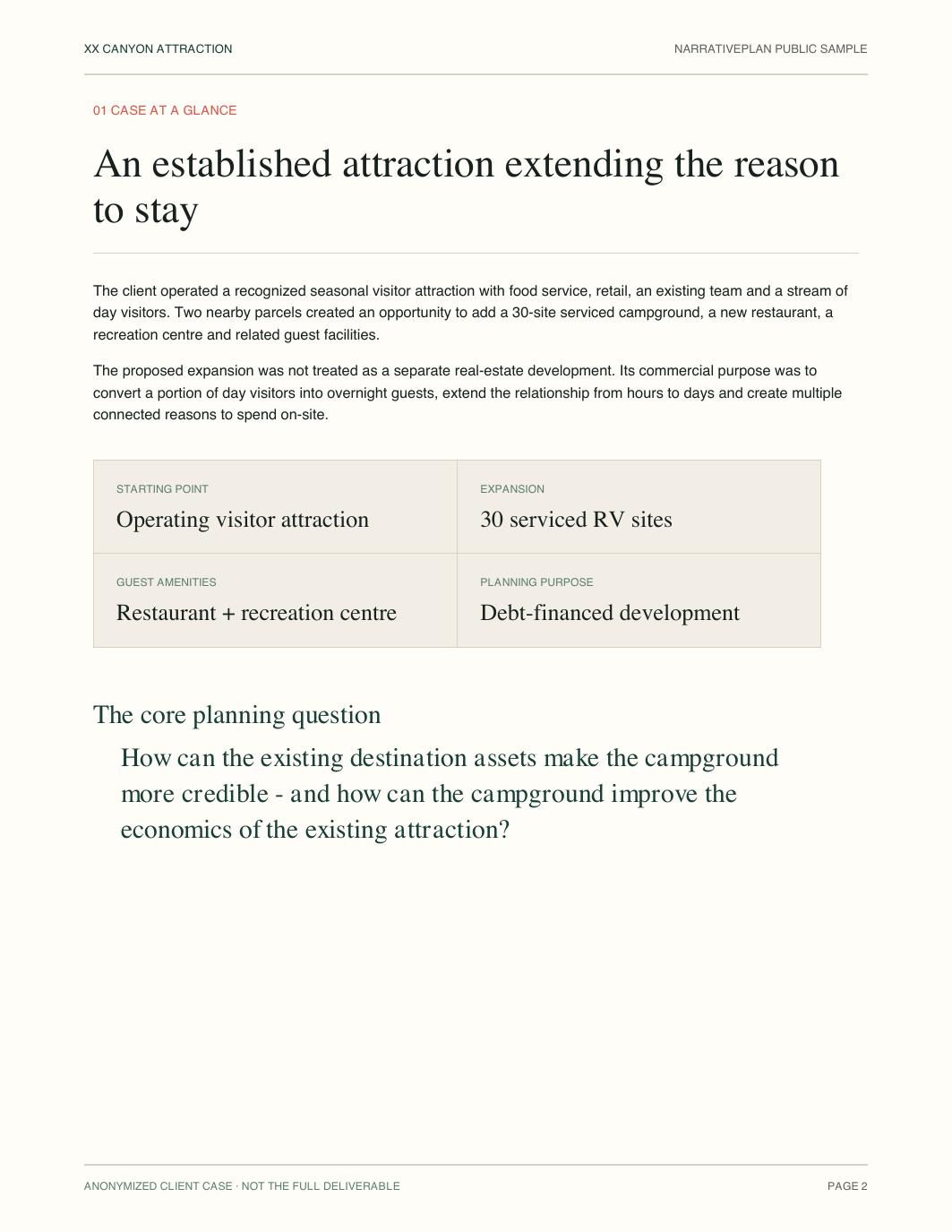
XX Canyon Attraction already had a recognized visitor experience, food service, retail, an operating team and two nearby development parcels. The planning task was to turn those assets into a coherent expansion story for a 30-site campground, new restaurant and recreation centre.
 ANONYMIZED SAMPLE
THE PLANNING CHALLENGE
The raw facts did not yet form one business.
The source materials arrived at different times and did not always describe the project in exactly the same way. The final scope had to reflect the latest client direction: both parcels, 30 serviced RV sites, a new restaurant, a recreation centre and related facilities, completed as one project without cabins.
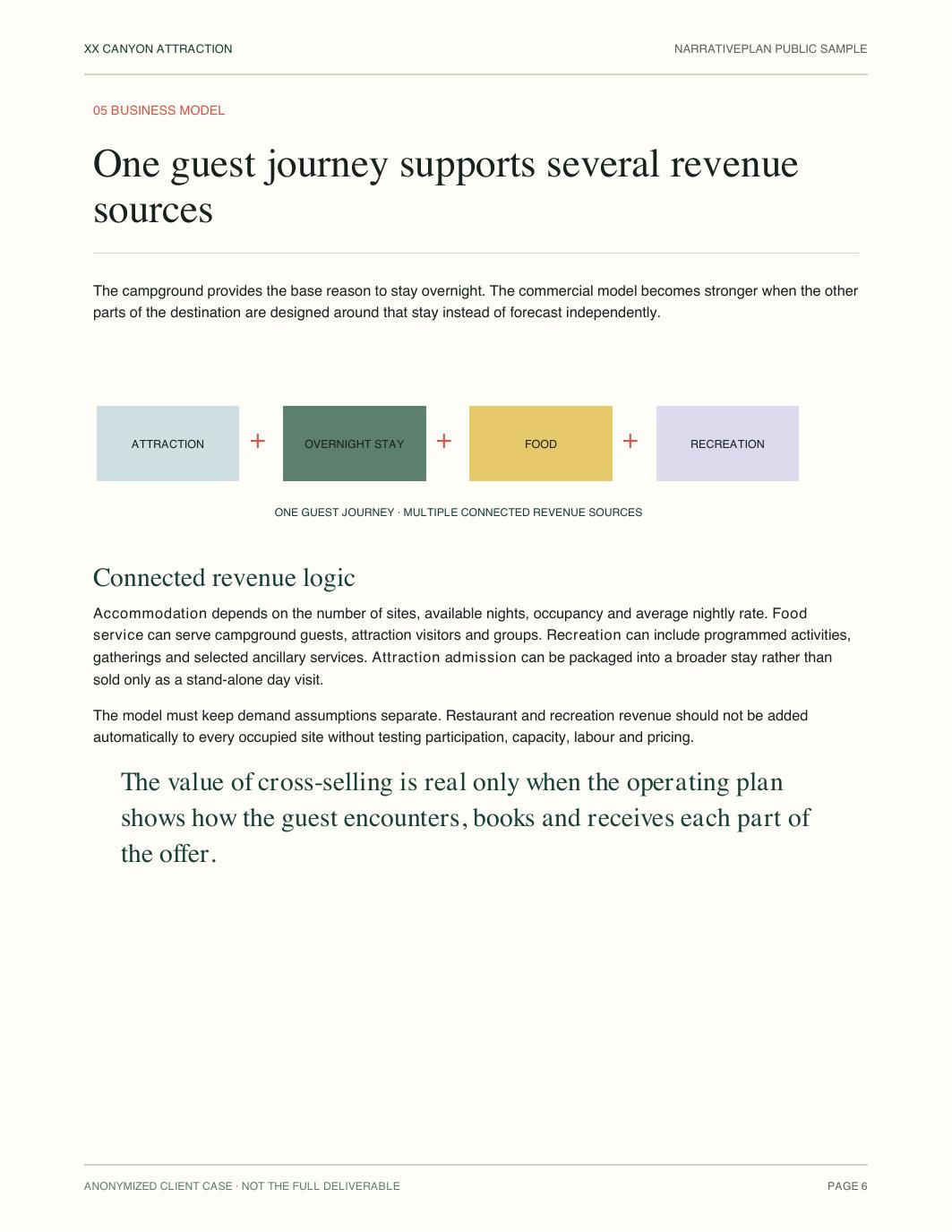
The expansion also had to make strategic sense beside the existing attraction. A campground could not be presented as a detached real-estate project. Its reason for being was the opportunity to convert an established stream of day visitors into overnight guests, extend the relationship from hours to days and create connected revenue from accommodation, food, recreation and attraction admission.
THE STRATEGIC THESIS
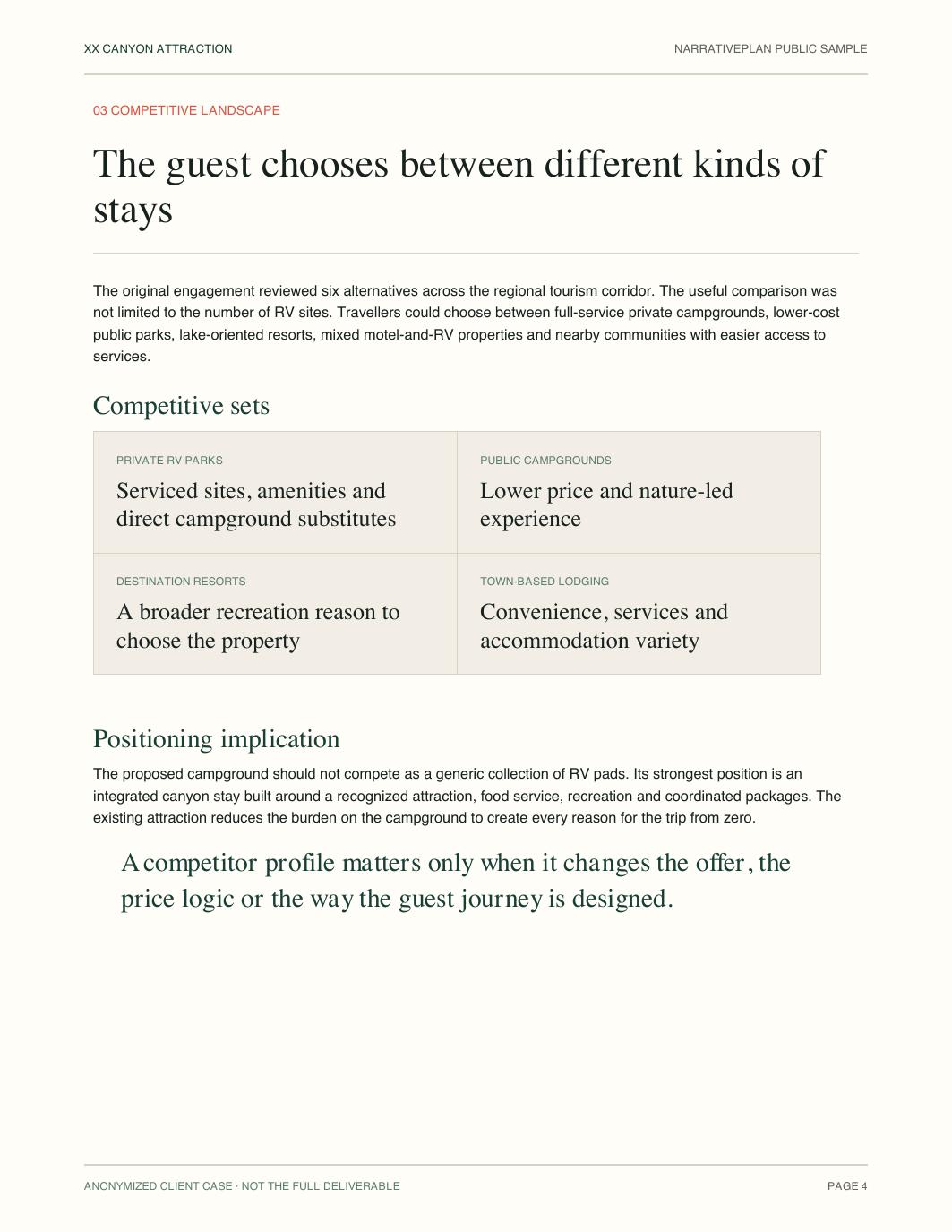
Do not compete as a generic collection of RV pads. Build an integrated canyon stay around a recognized attraction, food service, recreation and coordinated packages.
THE METHOD
Build the case in the same order the business has to work.
- Reconcile the evidence.
Later and clearer client instructions took precedence. Unresolved items were separated from established facts instead of being silently filled with generic assumptions.
- Define the commercial system.
The campground, restaurant, recreation centre and attraction were modelled as one guest journey, with cross-selling and shared demand rather than four disconnected products.
- Research the actual corridor.
The plan explains the Canadian and British Columbia camping market, operating trends and constraints, then profiles six alternatives across private campgrounds, public parks, resorts and mixed lodging properties.
- Connect strategy to the model.
Capacity, seasonality, nightly rate, occupancy, food and recreation revenue, staffing, development cost and financing terms were made consistent across the narrative and editable Excel pro forma.
- Run whole-plan quality checks.
The final review tested source fidelity, narrative logic and financial consistency. It also kept permitting, site planning, technical work and cost validation visible as implementation priorities—not disguised as settled facts.
THE COMPLETED WORK
A client-facing plan, not a disguised credit memo.
The result presents the expansion affirmatively while remaining precise about what management must complete next. The plan does not make the lender’s decision, promise approval or turn the conclusion into a feasibility verdict.
Outcome boundary: this case study describes the planning work and completed deliverables. It does not state or imply that financing, land-use approval or construction approval was obtained.
THE ANONYMIZED SAMPLE
Inspect the narrative itself.
The 8-page excerpt is adapted from the completed engagement. The client name, exact location, parcel identifiers, detailed financial schedules and other transaction information are intentionally excluded.
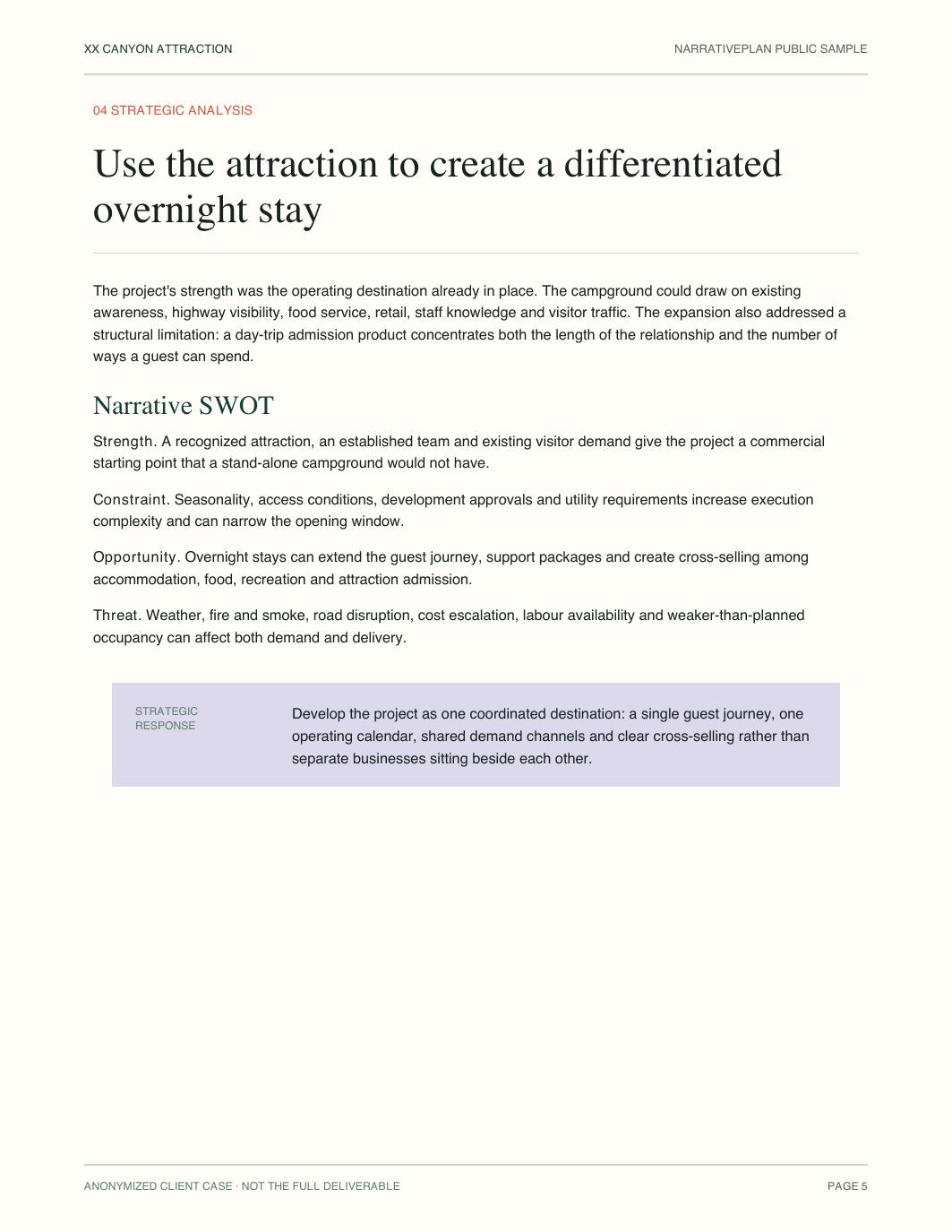
This privacy-conscious adaptation demonstrates NarrativePlan’s research, strategic analysis and narrative structure. It is not the full client deliverable and is not legal, engineering or investment advice.